
Engineering & STEM
What happens when students are presented with a problem that doesn’t have one obvious answer?
They ask questions.
They investigate possibilities.
They imagine solutions, build prototypes, test their ideas, and discover that improvement often begins with something that didn’t work as expected.
At Seneca Hill, every student has Engineering class on their timetable twice a week. They are encouraged to become active problem-solvers.
Through hands-on challenges and connections between science, technology, engineering, and mathematics, students develop the curiosity, creativity, knowledge, and persistence to approach complex problems with confidence.
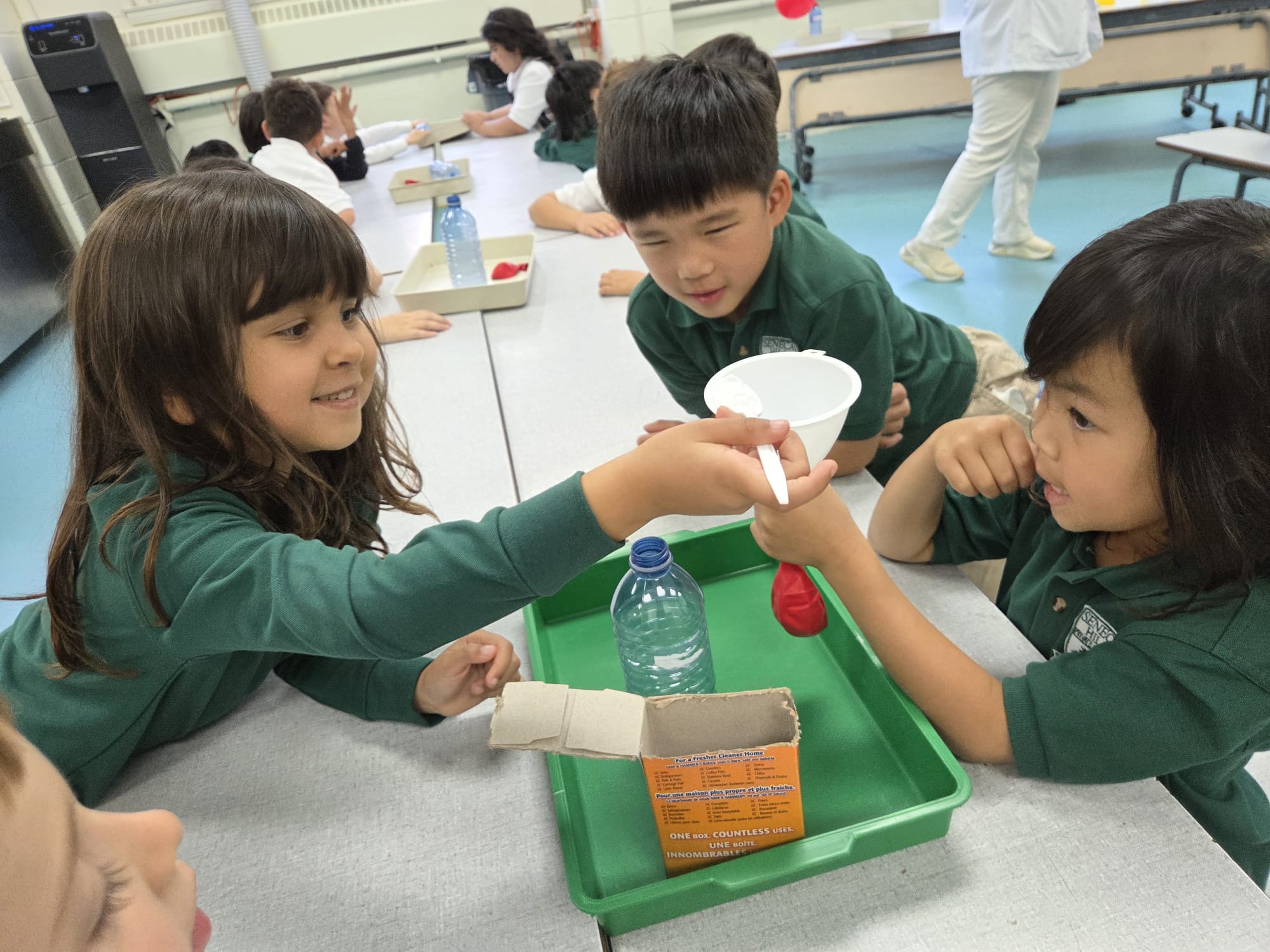
Because the world doesn’t simply need students who know answers. It needs people who know how to ask better questions and find thoughtful solutions.
From Idea to Prototype – The Engineering Design Process
Engineering is more than building a finished product. It is a way of thinking. We introduce students to a design process that encourages careful observation, creative thinking, experimentation, and improvement.
- Identify the Problem: Every meaningful design begins with a challenge. Students consider what needs to be accomplished, investigate the problem, and identify relevant questions or constraints.
- Imagine and Plan:Students explore possibilities, share ideas, develop plans, and consider the materials, knowledge, and strategies they might need.
- Design and Build: Ideas begin to take shape. Students create models, structures, mechanisms, or prototypes that give them an opportunity to put their plans into practice.
- Test and Evaluate: Does the design work as intended? What does the evidence show? What could be improved? Students examine results, identify limitations, and consider why certain approaches are more effective than others.
- Refine and Improve: The first attempt is rarely the final answer. By revisiting their ideas and improving their designs, students discover the value of persistence, feedback, and thoughtful iteration.
- Communicate and Reflect: Students explain their reasoning, share what they discovered, and consider how their thinking has changed.

Where Academic Knowledge
Meets Real-World Application
STEM learning is most powerful when students understand the relationship between what they study and what they can do with that knowledge.
Mathematics becomes a tool for reasoning.
Students apply measurement, geometry, patterns, data, and numerical thinking to make predictions, compare alternatives, and evaluate results.
Science becomes an opportunity to investigate.
Through observation, questioning, and experimentation, students deepen their understanding of scientific ideas and their applications.
Technology becomes a tool for creating.
Digital literacy and coding experiences introduce students to computational thinking, responsible technology use, and opportunities to express ideas through digital tools.
Engineering brings disciplines together.
When students design, build, test, and improve, they discover that meaningful problems rarely fit neatly inside one school subject.
They begin to see learning as a connected process rather than a collection of separate lessons.
The Value of Getting It Wrong
Building Resilience Through Design
An engineering challenge doesn’t always work on the first attempt.
A structure may be unstable. A mechanism may behave unexpectedly. A design may need to be reconsidered.
These moments are valuable.
Students learn to examine what happened, identify possible causes, and respond with a new strategy.
Rather than treating an unsuccessful attempt as the end of learning, the engineering process turns it into an opportunity for deeper understanding.
Students experience the satisfaction that comes from improving an idea through reasoning, teamwork, and perseverance.
The result is more than a finished project. It is a stronger, more confident problem-solver.


Skills That Extend Beyond STEM
Through engineering and STEM experiences, students have opportunities to develop:
- Critical Thinking: Investigating problems, evaluating information, and making reasoned decisions.
- Creativity: Imagining possibilities and exploring alternative approaches.
- Collaboration: Sharing responsibilities, listening to ideas, and building solutions together.
- Communication: Explaining designs, defending reasoning, and presenting discoveries.
- Perseverance: Learning from setbacks and refining work over time.
- Independence: Taking initiative, making decisions, and reflecting on results.
These are essential skills for academic learning and for the changing world students will enter.
Come see us in action!
The best way to understand Seneca Hill is to visit our school.
We invite prospective families to come for a tour, meet members of our team, see our classrooms, and learn more about our academic program and school community.
To book a tour or speak with our admissions team, please contact us here, call 416.499.8790 or email [email protected].
Directions: We are located at Don Mills and Lawrence, adjacent to the Shops on Don Mills.
Address: 33 Overland Drive North York, Ontario M3C 2C3
Tel: (416) 499-8790
Email: [email protected]
